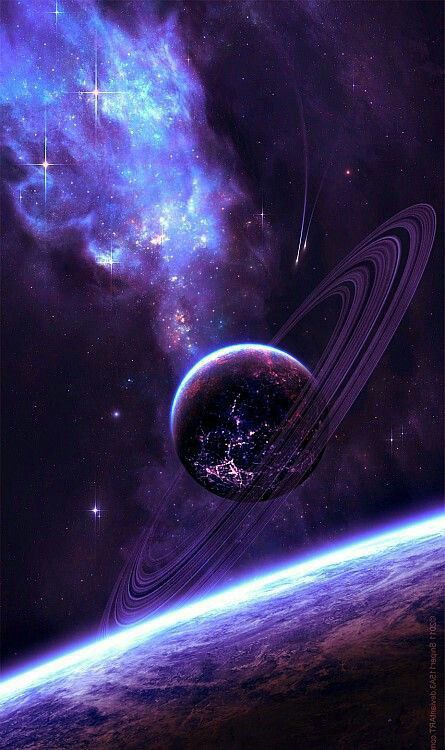
1. The universe is approximately 13.8 billion years old.
2. It consists of billions of galaxies, each containing billions of stars.
3. The Milky Way, our galaxy, is estimated to contain around 100-400 billion stars.
4. The universe is constantly expanding, with galaxies moving away from each other.
5. Dark matter, which does not emit or interact with electromagnetic radiation, makes up about 27% of the universe’s mass-energy content.
6. Dark energy, comprising about 68% of the universe, is responsible for the accelerated expansion of the universe.
7. The cosmic microwave background radiation is the afterglow of the Big Bang and fills the universe.
8. Black holes are regions in space where gravity is so strong that not even light can escape.
9. Supermassive black holes are thought to exist at the center of most galaxies, including the Milky Way.
10. Quasars are among the brightest objects in the universe, powered by supermassive black holes.
11. Neutron stars are incredibly dense remnants of supernova explosions.
12. Pulsars are rapidly rotating neutron stars that emit beams of electromagnetic radiation.
13. The largest known structure in the universe is the Hercules-Corona Borealis Great Wall, a filament of galaxies stretching over 10 billion light-years.
14. The cosmic web is a network of filaments composed mostly of dark matter and gas that connect galaxies across the universe.
15. The observable universe is estimated to contain at least 2 trillion galaxies.
16. Gravitational lensing occurs when the gravitational field of a massive object bends the light from more distant objects, acting like a lens.
17. The universe contains vast voids, regions with very few galaxies and little matter.
18. The multiverse theory suggests the existence of parallel universes beyond our observable universe.
19. The first stars in the universe formed around 100 million years after the Big Bang.
20. Exoplanets are planets outside our solar system and are commonly discovered using the transit method or radial velocity method.
21. The habitable zone, or Goldilocks zone, is the region around a star where conditions may be suitable for life as we know it.
22. The Fermi paradox raises the question of why we have not yet observed evidence of extraterrestrial civilizations, despite the high probability of their existence.
23. The Drake equation estimates the number of active, communicative extraterrestrial civilizations in the Milky Way galaxy.
24. The WOW! Signal, detected in 1977, remains one of the most mysterious potential signals from extraterrestrial intelligence.
25. The Hubble Space Telescope has provided astronomers with unprecedented views of the universe and has made numerous groundbreaking discoveries.
26. The James Webb Space Telescope, scheduled for launch, will be the premier observatory of the next decade, studying the universe in infrared wavelengths.
27. The Kepler Space Telescope discovered thousands of exoplanets during its mission, revolutionizing our understanding of planetary systems.
28. The Parker Solar Probe is on a mission to study the Sun’s outer atmosphere and solar wind up close.
29. The Voyager 1 and Voyager 2 spacecraft are the farthest human-made objects from Earth and have entered interstellar space.
30. Quantum entanglement, a phenomenon where particles become correlated in such a way that the state of one instantly affects the other, could potentially enable future quantum communication across vast distances.
31. Quantum computing holds the promise of solving certain problems exponentially faster than classical computers by harnessing the principles of quantum mechanics.
32. The concept of a “digital universe” refers to the idea of representing and simulating the entire universe in a computational framework.
33. String theory proposes that fundamental particles are not point-like but instead tiny, vibrating strings.
34. The holographic principle suggests that all the information contained within a volume of space can be encoded on its boundary.
35. Cosmic inflation is a theory that explains the rapid expansion of the universe in the first moments after the Big Bang.
36. The anthropic principle posits that the observed values of physical constants and parameters in the universe must be compatible with the existence of conscious observers.
37. The concept of time dilation, predicted by Einstein’s theory of relativity, means that time can appear to pass at different rates for different observers, depending on their relative motion or gravitational fields.
38. The concept of a multiverse arises from various theories in physics, including inflationary cosmology and string theory, suggesting the existence of many universes beyond our own.
39. The concept of brane cosmology proposes that our universe is a 3-dimensional “brane” embedded in a higher-dimensional space, with other branes potentially existing parallel to ours.
40. The cosmic microwave background radiation is the oldest light in the universe, dating back to about 380,000 years after the Big Bang, when the universe became transparent.
41. The cosmic web is a large-scale structure of the universe composed of interconnected filaments of dark matter and gas, where galaxies are located at the intersections.
42. The Planck satellite has provided detailed measurements of the cosmic microwave background radiation, shedding light on the early universe’s properties and evolution.
43. The Wilkinson Microwave Anisotropy Probe (WMAP) mapped the temperature fluctuations in the cosmic microwave background radiation with unprecedented precision, helping to refine our understanding of the universe’s composition and history.
44. The Sloan Digital Sky Survey (SDSS) has created the most detailed three-dimensional maps of the universe to date, covering vast regions of space and revealing the distribution of galaxies and large-scale structures.
45. The Large Hadron Collider (LHC) is the world’s largest and most powerful particle accelerator, designed to collide protons at high energies to explore the fundamental properties of matter and the early universe.
46. The Laser Interferometer Gravitational-Wave Observatory (LIGO) has detected gravitational waves from merging black holes and neutron stars, opening a new window to observe the universe.
47. The Atacama Large Millimeter/submillimeter Array (ALMA) is a revolutionary observatory located in Chile’s Atacama Desert, allowing astronomers to study the cold, dusty regions of the universe where stars and planets form.
48. The Event Horizon Telescope (EHT) captured the first-ever image of a black hole in 2019, providing direct observational evidence of these enigmatic objects predicted by Einstein’s theory of general relativity.
49. The Gaia spacecraft is mapping the positions and velocities of over a billion stars in the Milky Way, creating a detailed 3D map of our galaxy and improving our understanding of its structure and evolution.
50. The search for extraterrestrial intelligence (SETI) continues through various initiatives, including radio telescopes scanning the skies for potential signals from other civilizations.
 Multiverse Cooperations
Leave a comment